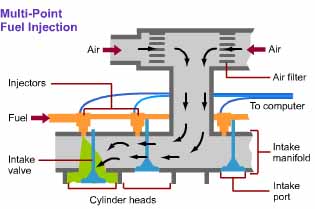
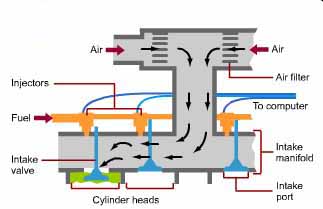
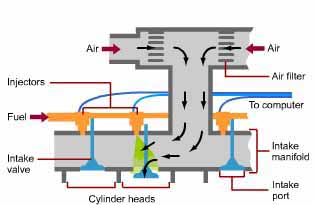
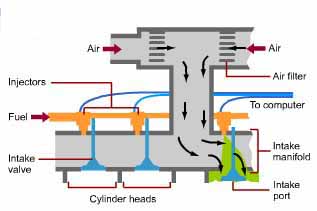
     |  CRDi technologyMost diesel engine-powered vehicles are perceived to be noisy, highly pollutive and have very uncomfortable riding qualities. But diesel vehicles have positive points, too. Apart from the cheaper price of fuel, they produce more torque and are better load luggers like buses and trucks. Besides, they allow higher compression and, in that respect, are better than gasoline on the efficiency front. Diesel engines are most efficient when the fuel at high pressure is injected directly into the combustion cylinder at the point when the piston is at its highest position. Here, the compression heats up the air to temperatures above the ignition point of diesel, and there is a contained explosion as the fuel burns in this heated air. The explosion is a fairly violent one and the engine is high on NVH or noise, vibration and harshness. One solution to this NVH problem is an indirect injection engine. But indirect injection makes and delivers power slower than a direct injection engine, and vehicles powered by such engines tend to be sluggish. Hyundai's CRDi engine "redefines" diesel technology, says Hyundai Asia Resources, Inc. (HARI) In a statement, the company said the CRDi -- abbreviation for Common Rail Direct Injection -- engine was developed by Hyundai with US-based Detroit Diesel using the system developed by European carmaker Fiat in 1997. Common rail diesels have been doing duty in some luxury cars in the market, but this is "the first time it is being made available in the Philippines in this price range and in this vehicle category," HARI said. The CRDi technology makes the diesel engine run like a gasoline-powered one. "It's fast, quiet and economical, while maintaining the diesel engine characteristics of higher pulling power," the company said. In the CRDi unit, a tube -- also called common rail -- connects all the injectors and contains fuel at a constant high pressure of 1,350 bars. To do what the indirect injection engine does, the CRDi engine squirts a small amount of fuel into the engine before the actual charge and another one afterwards. The high pressure in the common rail ensures that when injected, the fuel atomizes to a very high degree and mixes evenly with the air, thereby leaving little unburned fuel and making very clean exhaust gas. Engine pressure, fuel quantity and injection timing are controlled electronically. The injectors have variable control heads which allow a "very precise" dose of diesel into each cylinder. The onboard computer makes sure the fuel is injected at the optimum moment. "This ensures lower emissions, makes the engine extremely responsive, and allows better fuel economy," HARI said. The company also noted the level of refinement achieved in a diesel engine by the Hyundai CRDi. "Although there is no mistaking the signature diesel engine noise when you start the car, once it is running, it is virtually indistinguishable from a gasoline-powered one in terms of driving and power delivery characteristics," it said. The new CRDi engine in the Hyundai Starex produces 145ps and is capable of very fast acceleration with high torque even at low rpm. HARI added that the engine can even reach a top speed of 180 kph. Fuel efficiency is rated at "15% better than turbo intercooler diesel engines." MPFI System http://sitebuilder.yola.com/ide/index.jsp?siteid=8a4986cc1c03c7ff011c1a062399453c |
